
One of the first things most people ask about ear lobe repair is how much it will hurt. It’s a completely understandable concern – your ears are sensitive, and the idea of any kind of procedure on them can feel daunting.
The honest answer? For most patients, the experience is far more comfortable than they expected. With the right specialist, the right technique, and proper preparation, ear lobe repair is a procedure where pain is minimal to non-existent.
This guide takes you through everything you need to know – from what happens in the days before your appointment, to what you’ll feel during the procedure itself, and how your recovery will unfold. We’ve also included a pain scale breakdown and a clear chart of normal versus concerning signs, so you’ll know exactly what to expect at every stage.
Let’s address the question directly: ear lobe repair, when performed by a qualified specialist in a properly equipped clinic, is not a painful procedure for the vast majority of patients.
The earlobe is a small, soft structure with relatively few nerve endings compared to other parts of the body. This makes it one of the more comfortable areas to work on cosmetically. Add to that the use of numbing agents, and most patients describe the experience as feeling mild pressure or gentle movement – not pain.
Here is an honest pain scale breakdown of what patients typically experience at each stage of the process:
Stage | Pain Level | What Patients Typically Experience |
Numbing application | 0 / 10 | Topical agent is applied – most patients feel nothing at all |
During procedure | 1 / 10 | Mild pressure or gentle sensation only; no pain reported by most patients |
Immediately after | 1–2 / 10 | Very slight tenderness as numbing wears off; easily manageable |
Day 1–2 | 1–2 / 10 | Mild soreness that settles quickly with no medication needed in most cases |
Day 3–7 | 0–1 / 10 | Most patients feel normal; only minor awareness of the treated area |
Week 2 onwards | 0 / 10 | Fully comfortable; healing well underway |
These figures reflect the experience of patients who have their procedure performed by a qualified specialist using proper numbing and technique. Results may vary with less experienced providers – another reason why choosing the right clinic matters so much.
Minimum invasive ear lobe repair – which uses dermal fillers, gentle tissue correction, or Minimum Invasive reshaping techniques – tends to be the most comfortable option available. Patients who undergo Minimum invasive correction typically describe:
Minimum invasive repair requires no recovery period, produces no open wounds to heal, and involves no stitches to manage. For patients with mild to moderate earlobe damage, it is often the most appropriate and most comfortable route.
Good preparation makes a significant difference to how comfortable and smooth your procedure experience will be. Here is what to expect – and what to do – in the days and hours leading up to your appointment.
A genuine, safe ear piercing and repair clinic will ask you questions before your appointment and may send you pre-procedure guidance. Before you arrive, here is what a well-run clinic will want to know:
This information allows your doctor to tailor the procedure to your individual profile and identify any factors that require extra care.
Follow this checklist in the 24–48 hours before your appointment for the most comfortable possible experience:
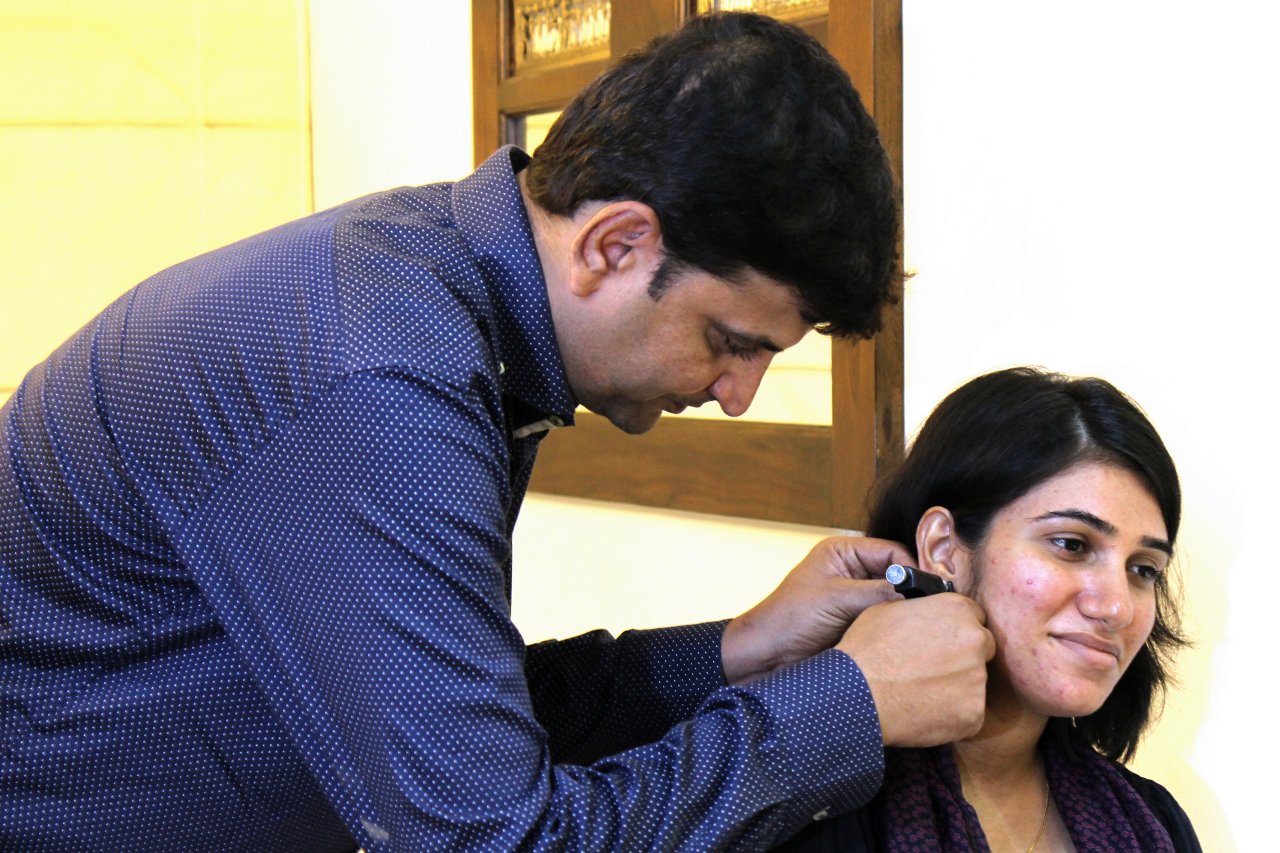
Understanding what will happen during the procedure helps remove anxiety and makes the experience far more manageable. Here is a step-by-step overview of what a typical ear lobe repair involves at our clinic:
The entire process typically takes between 15 and 45 minutes per ear, depending on the complexity of the correction. You can leave the clinic the same day and return to your normal activities shortly after.
A genuinely hygienic ear piercing and repair clinic treats your procedure with the same standard of care as any minor medical procedure. During your treatment at our clinic, you can expect:
These standards are not optional extras – they are the minimum expectation at any reputable clinic. If a provider cannot confirm these measures, it is worth reconsidering your choice.
Recovery from ear lobe repair is typically smooth, quick, and manageable. Most patients are pleasantly surprised by how little disruption there is to their daily lives. Here is what the recovery timeline generally looks like:
If you’ve had a minimally invasive correction (such as filler or gentle reshaping), recovery is almost immediate. There is no wound to close and no stitches to remove. You may notice mild redness or slight swelling for a day or two, but these settle quickly and require no special management beyond basic hygiene.
If your procedure involved a small incision and sutures:
Healing times vary depending on individual factors such as age, skin type, general health, and how well aftercare instructions are followed. Your doctor will give you a personalised timeline based on your specific procedure.
Knowing the difference between signs of healthy healing and signs of a potential complication helps you respond appropriately without unnecessary worry. Use this table as your reference guide:
Normal Signs (No Action Needed) | Concerning Signs (Contact Us) |
Mild redness around the treated area | Increasing pain or throbbing after Day 3 |
Slight swelling for 24–48 hours | Significant swelling that worsens over time |
Tender to the touch for 1–2 days | Yellow, green, or foul-smelling discharge |
Small amount of clear or pale fluid | Fever or flu-like symptoms |
Itching as the skin heals (normal skin repair) | Hot, hard skin around the earlobe |
Faint pink scar that gradually fades | Bleeding that does not stop with gentle pressure |
For many patients with mild to moderate earlobe damage – including elongated piercing holes, minor stretching, and early-stage thinning – ear lobe repair without surgery is the preferred route, and for good reason.
Here is why minimum invasive repair typically results in a more comfortable experience overall:
Minimum invasive repair is not suitable for every case. If your tear is complete, your stretching is significant, or you have gauged your earlobes extensively, a minor surgical approach may be required for the best result. During your consultation, Dr. Lalit or Dr. Poonam Sharma will advise you honestly on which option is right for your specific situation.
While ear lobe repair is already a low-pain procedure, the following practical tips will help ensure your experience is as comfortable as possible at every stage:
Many patients arrive at our clinic having heard that ear lobe repair is painful. Most leave surprised by how easy and comfortable the experience was. This outcome is not accidental – it is the result of a deliberate, patient-centred approach to every procedure we perform.
Here is what makes the difference at our clinic:
We understand that every patient is different. Some people have a higher pain threshold; others are more sensitive. We adapt our approach to the individual – not the other way around.
Use this summary table as a handy reference guide for your ear lobe repair journey:
Before | During | After |
Avoid blood thinners & alcohol 24 hrs prior | Doctor applies topical numbing agent | Return home the same day |
Remove existing earrings in advance | Gentle correction or filler technique used | Keep area clean and dry |
Come with clean, bare ears – no cream/perfume | Procedure takes 15–45 minutes | No earrings for 6–8 weeks |
Share full medical & allergy history | You feel pressure, not pain | Follow written aftercare instructions |
Stay hydrated and eat beforehand | Doctor explains each step as it happens | Attend follow-up if advised |
With proper numbing, the vast majority of patients feel no pain during the procedure – only mild pressure or gentle movement. Pain during ear lobe repair is largely a myth when the procedure is performed by a qualified specialist who applies anaesthetic before starting.
For Minimum invasive repairs, soreness is typically minimal and resolves within 24–48 hours. For minor surgical corrections, you may notice some tenderness for 3–5 days, but this is easily managed and most patients do not require any pain medication.
Yes. Most patients return to their normal activities – including work – the same day or the following day. There is no significant downtime associated with ear lobe repair, particularly for Minimum invasivel procedures.
For mild to moderate earlobe damage, Minimum invasivel repair can be highly effective and produces results that are visible immediately. For more significant damage – such as a complete tear or extensive gauge stretching – a minor surgical approach typically produces the most durable result. Your doctor will advise the most appropriate option during your consultation.
As a general guide, you should wait at least 6–8 weeks before wearing earrings in a repaired earlobe. Your doctor will confirm the specific timeline for your case. When you do re-pierce or start wearing earrings again, begin with lightweight, hypoallergenic styles to minimise pressure on the healing tissue.
If you experience pain that is increasing rather than decreasing after the first 48 hours, or if you notice swelling, redness, or discharge that is worsening, contact our clinic promptly. This may indicate an early sign of infection that can be addressed quickly and easily with appropriate treatment.
Scarring depends on the technique used and how your skin heals individually. Minimum invasive repairs leave no scar. Minor surgical repairs may result in a very faint, small scar that typically fades significantly within a few months. Our doctors use precise technique specifically designed to minimise scar visibility.
Refer to the Normal vs. Concerning Signs table earlier in this page. Mild redness, slight swelling, and gentle tenderness in the first few days are all signs of healthy healing. If you are ever in doubt, do not hesitate to contact our clinic – we are always happy to reassure or advise.
Copyright @2021 Design & Developed By Namastetu Technologies
Copyright @2026 Design & Developed By Namastetu Technologies Pvt. Ltd
Specialized care for ear hole repair and restoration with precision and compassion.