
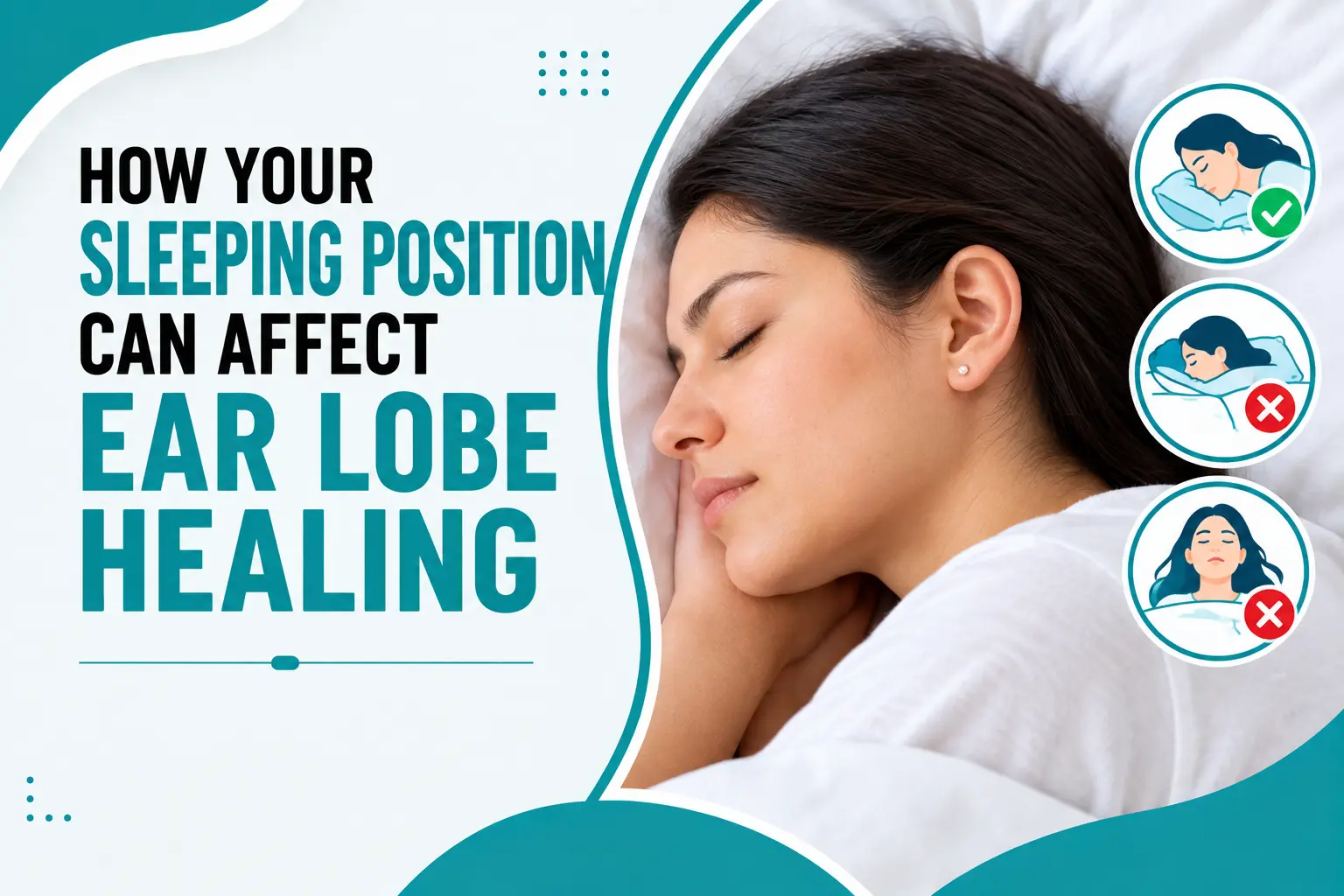
If you’ve recently had an earlobe repair or new piercing, you may not realise that how your sleeping position can affect ear lobe healing just as much as daytime care. Many people focus on cleaning routines and avoiding pressure while awake, but forget that hours of unconscious pressure at night can slow healing or even undo a repair. This guide explains exactly how sleep posture affects your healing lobe, which positions to avoid, and simple ways to protect your results while you rest.
Why Sleeping Position Matters for Ear Lobe Healing
During the day, you naturally notice if something is pressing on your ear and adjust. At night, that awareness disappears, and your lobe can stay under steady pressure for hours without you knowing.
This is exactly why sleeping position can affect ear lobe healing more than most people expect. A freshly repaired or pierced lobe is still rebuilding strength beneath the surface, even when it looks settled on the outside.
Consistent nighttime pressure on this delicate tissue can slow healing, cause irritation, or in some cases, reopen a repair entirely. Understanding this link helps you protect your results without much extra effort.
How Sleeping on the Healing Side Affects Recovery
When you sleep directly on the treated ear, your body weight rests on the lobe for hours at a time. This steady, prolonged pressure is very different from the brief, occasional contact your ear experiences during the day.
Restricted blood flow is one of the main concerns. Healing tissue relies on healthy circulation to rebuild strength, and constant pressure can reduce blood flow to the area.
Physical strain on new tissue is another risk, especially in the first few days after a repair or piercing. The tissue is still fragile, and pressing into a pillow repeatedly can stretch or irritate it before it has properly closed.
Increased friction from pillowcases, especially rough or textured fabric, can also rub against the healing site as you shift positions overnight. This friction may cause redness, tenderness, or slower healing.
Best Sleeping Positions to Support Ear Lobe Healing
The good news is that protecting your healing lobe at night doesn’t require special equipment or drastically changing your sleep habits.
- Sleep on your back whenever possible, since this keeps both ears free from pressure entirely.
- Sleep on the opposite side if back-sleeping feels uncomfortable, keeping the healing ear facing upward.
- Use a travel or U-shaped pillow to support your head while leaving the ear area open.
- Choose a soft, smooth pillowcase, such as cotton or satin, to reduce friction if you do shift positions.
- Tie hair back at night if it tends to catch on the ear or pull at jewellery while you sleep.
Most people only need to follow these steps closely for the first 2 to 3 days after the procedure, since this early window is when the area is most delicate.
How Long Should You Avoid Sleeping on the Healing Ear?
A common question is exactly how long extra care is needed before normal sleeping positions are safe again. The honest answer depends on your individual healing pace, but there is a general pattern most people follow.
| Time After Procedure | Sleeping Guidance |
| Days 1–3 | Avoid the healing side completely; sleep on the back or opposite side |
| Days 4–7 | Continue being cautious; use a supportive pillow if unsure |
| Week 2 onward | Area typically settles enough for normal positions, with general care |
| Weeks 6–8 | Full tissue strength rebuilt; sleeping habits no longer a major concern |
This timeline works well alongside the wider healing process, since earlobe repair is a minimally invasive procedure with no stitches required. We close the lobe and fit a surgical stud with a new piercing on the same day, so there’s no separate waiting period before you have jewellery in place, but the surgical stud should stay untouched while these sleep precautions are followed.
Signs Your Sleeping Habits Are Affecting Your Healing
Sometimes the connection between sleep and healing isn’t obvious until you notice a pattern. Being aware of these signs helps you catch and correct the habit early.
You might notice increased tenderness or redness specifically on the side you tend to sleep on. Some people also notice their pillow shows small marks of irritation, or that the healing area feels more swollen in the morning than later in the day.
If you wake up and the treated ear feels unusually warm, sore, or more sensitive than expected, it’s worth reviewing your sleep position. Switching sides, even for a short trial period, often makes a noticeable difference within a few nights.
Practical Tips to Protect Your Ear Lobe While You Sleep
Beyond choosing the right position, a few small adjustments can make nighttime care even easier.
- Keep a spare travel pillow by your bed as a visual reminder to use it
- Set your phone reminder or note on your nightstand during the first few nights
- Avoid heavy hair products or accessories that could snag the area overnight
- Wash pillowcases regularly to reduce bacteria near the healing site
- If you tend to move a lot in your sleep, consider a slightly firmer pillow that holds its shape
Why Choosing an Experienced Specialist Makes a Difference
Good aftercare advice, including sleep guidance, is only as useful as the specialist who provides it. Working with an experienced earlobe correction specialist means you receive a personalised recovery plan rather than generic tips.
A trustworthy safe ear piercing clinic will walk you through exactly what to expect in the first few nights, based on the size and type of your specific repair. This is especially important for anyone considering split earlobe repair Mumbai, torn earlobe repair Mumbai, or stretched earlobe repair Mumbai, since larger repairs may benefit from a slightly longer period of extra care.
Choosing a hygienic ear piercing India provider also matters for your overall healing, since sterile tools and hypoallergenic jewellery reduce the risk of irritation from the very start. Whether you’re repairing an existing lobe or getting a fresh ear hole for earrings in Mumbai, the right specialist sets you up for smoother healing both day and night.
Frequently Asked Questions
1. Can sleeping on my ear ruin a new piercing or repair?
Yes, repeated pressure from sleeping on a healing ear can slow recovery and, in some cases, disturb a repair before it has fully closed. Avoiding that side for the first few days significantly reduces this risk.
2. What is the best pillow for earlobe healing?
A travel or U-shaped pillow works well because it supports your head while keeping pressure off the ear. A soft cotton or satin pillowcase is also gentler on healing skin than rougher fabrics.
3. How many nights do I need to avoid sleeping on my healing ear?
Most people only need to be careful for the first 2 to 3 days after the procedure, when the area is most delicate. After that, normal sleeping positions are usually fine with general care.
Final Thoughts and Next Steps
It’s easy to overlook sleep when thinking about earlobe recovery, but how your sleeping position can affect earlobe healing is just as important as daytime care. A few simple adjustments in the first few nights can make the difference between smooth healing and unnecessary setbacks.
If you’re preparing for a repair or already recovering from one, don’t leave your results to chance. Book a consultation with Earhole Repair, your trusted earlobe correction specialist, for a same-day, minimally invasive repair with no stitches required and clear aftercare guidance, including exactly how to protect your lobe while you sleep. Book your consultation today and heal with confidence.