
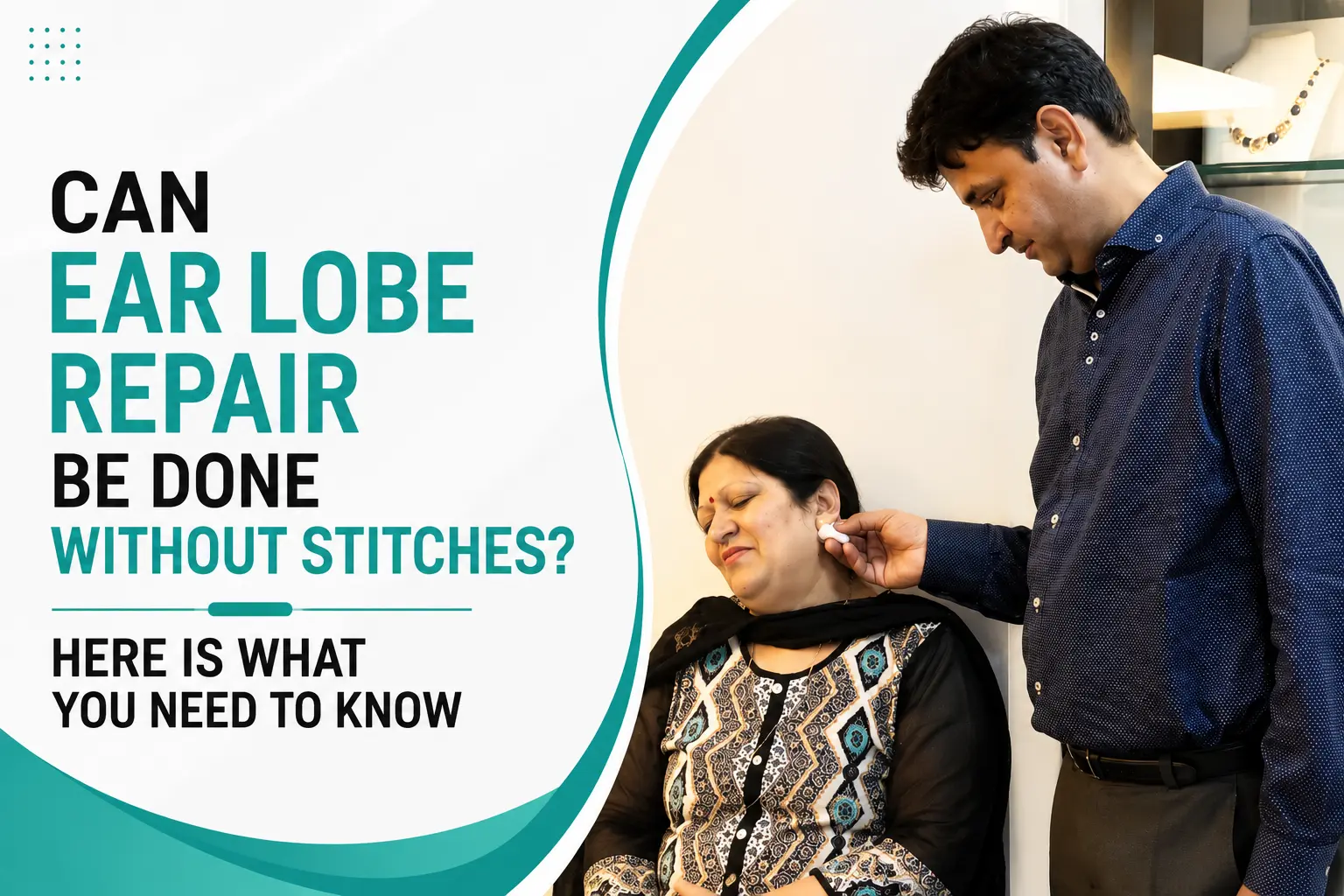
If you have been putting off addressing a torn or stretched earlobe, there is a good chance the word ‘stitches’ is part of the reason. The thought of sutures, even very small ones, makes many people hesitate. So the question is a fair one: can earlobe repair be done without stitches?
The answer, for a significant proportion of patients, is yes. Advances in minimum invasive cosmetic techniques mean that many earlobe concerns, from elongated holes to partial tears, can now be corrected without any stitching, cutting, or complex wound management. The procedure is quick, the results are visible immediately, and the recovery fits comfortably into a normal daily routine.
This guide explains exactly how stitch-free ear lobe repair works, who it is suitable for, what the procedure involves, and how to find a qualified, hygienic ear piercing clinic in Mumbai where you can have it done safely and effectively.
Can Ear Lobe Repair Be Done Without Stitches? Understanding the Technique
The traditional approach to earlobe repair involved a minor procedure with sutures, fine stitches placed to hold the torn or reshaped tissue together while it healed. While this approach is still used in some cases, it is no longer the only option, and for many patients, it is not the most appropriate one.
Modern earlobe correction uses a range of minimum invasive techniques that answer the question, can earlobe repair be done without stitches, with a clear yes for most presentations. These include:
• Non-invasive reshaping: using precise, controlled technique to restore the shape of a stretched or elongated hole without any incision or stitching
• Dermal filler injection: restoring volume and structural support to a deflated or thinned earlobe using a fine needle injection , no cutting, no stitches
• No-stitch tissue realignment: for partial tears and slit-shaped holes, gently bringing the tissue back into correct alignment to support natural closure
When Can Ear Lobe Repair Be Done Without Stitches, and When Might Stitches Be Needed?
Understanding which cases are suitable for stitch-free repair, and which may require a different approach, helps set realistic expectations before your consultation.
Earlobe Concerns That Are Typically Stitch-Free
• Mild to moderate elongation of the piercing hole , the hole has migrated downward or widened, but has not fully torn
• Stretched or widened holes from years of heavy earring wear or gauge stretching (within certain size limits)
• Partial tears , where the hole has begun to split, but the earlobe is still joined at the base
• Volume loss or deflation , where the lobe has lost its natural plumpness, and earrings no longer sit correctly
• Asymmetric holes , where one ear has stretched more than the other
What Does Ear Lobe Repair Without Stitches Actually Feel Like?
Anxiety about the procedure itself, rather than the stitches, is another common reason patients delay seeking help. Here is an honest description of what the experience involves:
Before the Procedure
At a qualified safe ear piercing clinic, your appointment begins with a consultation. The doctor examines your earlobe, asks about your medical and allergy history, and explains the recommended approach. This is the moment to ask every question you have; a good clinic will take the time to answer all of them before proceeding.
During the Procedure
The earlobe area is prepared with a medical-grade antiseptic. For reshaping or realignment procedures, you will feel mild pressure, a gentle, controlled sensation that most patients describe as entirely manageable. For filler injection, a very fine needle delivers the product in seconds. There is no cutting, no burning, and no stitches.
The procedure itself takes between 15 and 45 minutes per ear, depending on the technique. Most patients are surprised by how straightforward the experience is.
After the Procedure
You leave the clinic the same day. There is no wound to dress, no stitches to check, and no requirement to take time off work or pause your normal routine. Mild redness or slight tenderness in the first 24–48 hours is normal. After that, most patients feel entirely comfortable.
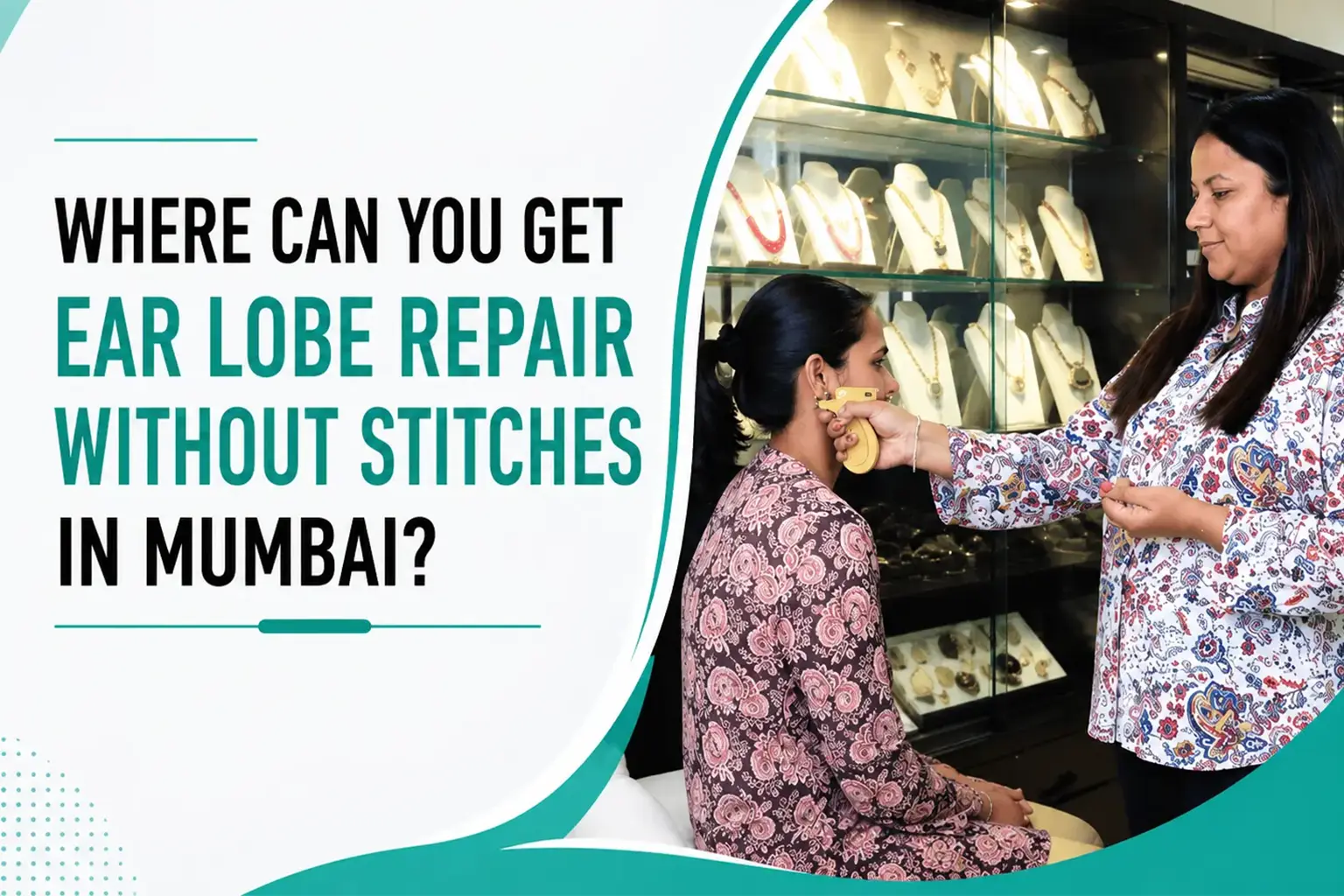
How to Find a Safe Ear Piercing Clinic in Mumbai for Stitch-Free Earlobe Repair
The quality of your result and your safety throughout the process depend entirely on the clinic and practitioner you choose. A safe ear piercing clinic in Mumbai offering genuine earlobe repair should meet every one of the following standards without hesitation:
- Single-use sterilised equipment, opened from sealed packaging in front of you before every procedure.
- Medical-grade antiseptic used for skin preparation, not just a standard alcohol swab.
- A clean, dedicated clinical treatment space, not a jewellery shop counter or shared salon area.
- A thorough consultation before any procedure begins, no clinic should work on you without assessing your specific situation first.
- Written aftercare instructions, not verbal only.
- A defined follow-up process if concerns arise during healing.
What to Avoid When Choosing an Ear Lobe Repair Provider in Mumbai
Mumbai has many providers offering earlobe-related procedures, not all of them in appropriate settings. Approach with caution any provider that:
- Works in a jewellery shop, beauty parlour, or general salon environment.
- Performs a procedure without first conducting a proper assessment and consultation.
- Cannot or will not confirm the metal composition of earrings used.
- Uses burning, cauterisation, or outdated techniques that carry unnecessary scarring risk.
- Provides only verbal aftercare advice with nothing in writing
Finding a hygienic ear piercing clinic in Mumbai that meets genuine clinical standards is worth the effort. The difference between a well-executed, stitch-free correction and a poorly performed one is significant, and the latter can actually be harder to correct than the original concern.
Recovery After Stitch-Free Ear Lobe Repair: What to Expect
One of the most significant advantages of stitch-free earlobe repair is the recovery experience. Because there are no open wounds, no stitches to manage, and no surgical disruption to the tissue, the aftercare is simple, and the recovery fits naturally into everyday life.
The 6–8 Week Earring Guideline
After any earlobe repair procedure, including stitch-free corrections, lightweight hypoallergenic earrings should remain in the treated hole for the full 6–8 weeks healing period. Even when the surface looks healed earlier, the internal tissue needs the full period to establish a stable, properly lined channel.
Titanium or surgical steel starter earrings are the safest choice during this period, both are confirmed nickel-free and tolerated well by healing tissue. Do not remove or change these earrings before the healing period is complete, even if the site appears fully healed.
Introducing New Earrings Gradually
After the 6–8 week healing period, new earring styles are introduced one step at a time, never all at once. This gradual progression protects the healed tissue and ensures the corrected result is maintained long-term:
1. Weeks 6–8: Lightweight hypoallergenic studs (with medical clearance)
2. Weeks 8–10: Small flat hoops or a second pair of lightweight studs
3. Month 3: Light drop earrings introduced
4. Month 3–4: Heavier traditional styles (jhumkas, chandbaalis) for occasions
This gradual approach is not a restriction; it is a protection. Following it consistently is what ensures the correction lasts for years rather than months.
Why Choosing a Hygienic Ear Piercing Clinic in Mumbai Matters for Your Result
The outcome of your earlobe repair, whether you need stitches or not, is significantly determined by the hygiene standards of the clinic where it is performed. A hygienic ear piercing clinic in Mumbai that operates to genuine clinical standards reduces infection risk, supports healthy healing, and produces results that are cleaner and more durable than those achieved in non-clinical settings.
Here is what clinical hygiene looks like in practice for an earlobe repair procedure:
- Instruments are either single-use disposable or autoclave-sterilised between every patient, not just cleaned.
- Gloves are worn throughout the procedure and changed if any contamination occurs.
- The skin is prepared with a certified medical-grade antiseptic before any work begins.
- Treatment surfaces are sanitised between patients, not just at the start of the day.
- Earrings or materials used are opened from sealed, sterile packaging in front of the patient
Your Questions Answered
Can earlobe repair be done without stitches at home?
No. Earlobe repair, even a minimum invasive, stitch-free procedure, must be performed by a medically qualified practitioner in a clinical environment. Home remedies, adhesives, and DIY approaches do not work for earlobe correction and can introduce infection, cause irregular scarring, and make professional correction significantly more complex. If you want effective, safe results, a qualified, safe ear piercing clinic is the only appropriate setting.
How long does it take for an earlobe repair without stitches to heal?
Surface healing after a stitch-free earlobe repair typically takes 2–3 weeks. However, the full internal healing of the earlobe tissue, including the formation of a stable, properly lined piercing channel, takes 6–8 weeks. During this period, lightweight hypoallergenic starter earrings should remain in place. After 6–8 weeks, new earring styles can be introduced gradually, with heavier traditional styles appropriate from 3–4 months post-procedure.
Is stitch-free earlobe repair permanent?
Yes, stitch-free earlobe repair using non-invasive reshaping or no-stitch tissue realignment is intended to produce a permanent result. Dermal filler-based corrections are not permanent and typically last 6–18 months before a top-up is needed. The longevity of any correction is significantly influenced by earring habits after healing. Patients who follow the gradual earring introduction guidance and adopt sensible long-term earring habits consistently report excellent long-term results.