

If you’ve looked in the mirror and noticed that one piercing hole looks bigger or lower than the other, you’re probably asking: does one earlobe stretch faster than the other? Yes, it can, and it’s far more common than most people realise. Daily habits, sleeping side, and even which hand you use can put uneven pressure on your ears. This guide explains why it happens, how to spot it early, and what a safe, minimally invasive fix looks like.
Does One Ear Lobe Stretch Faster Than the Other
Most people’s ears are not perfectly symmetrical, and they are not treated equally day to day. One lobe often carries more weight, takes more pressure, or gets tugged more often. Over months or years, that difference shows up as one hole stretching faster than the other.
This does not mean you did anything wrong. It simply means one side has been working harder. The good news is that uneven stretching is easy to spot once you know what to look for, and a stretched ear hole fix is available at any stage.
Why One Earlobe Stretches Faster: Common Causes
Uneven stretching usually comes from a mix of small, repeated habits rather than one big event. Here are the most common reasons one side wears down sooner.
Your sleeping side. If you always sleep on the same side, that ear presses into the pillow for hours. This steady pressure can slowly distort the piercing hole, especially if you sleep with earrings in.
Phone use. Holding a phone to the same ear every day adds pressure and friction to that lobe. Large earrings can also get pushed against the phone and pulled downward.
Your dominant hand. Most people put in, remove, and adjust earrings with the same hand. This often means one ear gets more tugging and twisting than the other.
Snagging and pulling. Hair, scarves, dupattas, helmet straps, and mask loops tend to catch on one side more often. A single hard tug can weaken tissue that has already been under strain.
Uneven piercing placement. If one hole was placed slightly lower or closer to the edge of the lobe, that side has less tissue to support the earring. Thinner tissue stretches faster.
Heavier earrings on one side. Some earrings are not perfectly balanced, and larger or heavier styles pull harder on the lobe over time.
How to Tell Which Ear Is Stretching: A Simple Self-Check
You don’t need special tools to check your ears at home. Try this quick three-step routine in front of a mirror.
1. The Mirror Test: Look at both ears straight on, without earrings. Compare the shape of each hole. A round, small hole is healthy, while a hole that looks oval, wider, or lower than the other suggests stretching.
2. The Earring Test: Put the same stud in both ears. If one earring sits lower, tilts forward, or feels looser, that lobe has likely stretched more.
3. The Touch Test: Gently feel the lower edge of each lobe between your fingers. A thin, soft, or slightly separated edge can mean the tissue is weakening.
This self-check is not a diagnosis, but it gives you a clear starting point before speaking with an ear piercing specialist Mumbai residents trust.
Left Ear vs Right Ear: What to Look For
Use this table to quickly note differences between your two ears.
| What to Check | Healthy Lobe | Possible Stretching |
| Hole shape | Small and round | Wider, oval, or teardrop-shaped |
| Earring position | Sits level and stays put | Hangs low, tilts, or slips out |
| Lower lobe edge | Firm and even | Thin, soft, or sagging |
| Comfort | No tenderness | Mild soreness or irritation |
| Symmetry | Matches the other ear | Noticeably lower or larger than the other ear |
If one ear shows two or more signs in the right-hand column, it is worth getting it checked before the damage progresses.
When Does Uneven Stretching Need Professional Attention?
A slightly different hole size does not always need treatment. However, certain signs mean it is time to act.
- Your earring keeps falling out or needs a plastic back to stay in place
- The hole is visibly larger or longer than the other ear
- A small notch or slit has formed at the bottom of the hole
- The lobe looks thin or feels weak when touched
- You have to avoid wearing earrings on one side because it feels uncomfortable
Acting early matters. A mildly stretched hole is simpler to correct than a fully split lobe, and recovery is smoother.
How to Slow Down Uneven Stretching
You can reduce the risk of one side stretching faster with a few simple changes.
- Switch your sleeping side from time to time, and remove earrings at night
- Alternate which ear you use for phone calls, or use earphones
- Choose lightweight earrings, especially for everyday wear
- Take earrings out before sports, hair styling, or putting on tight clothing
- Check both ears monthly using the self-check above
- Remove earrings gently, supporting the lobe with your other hand
Stretched Ear Hole Fix: What to Expect During Repair
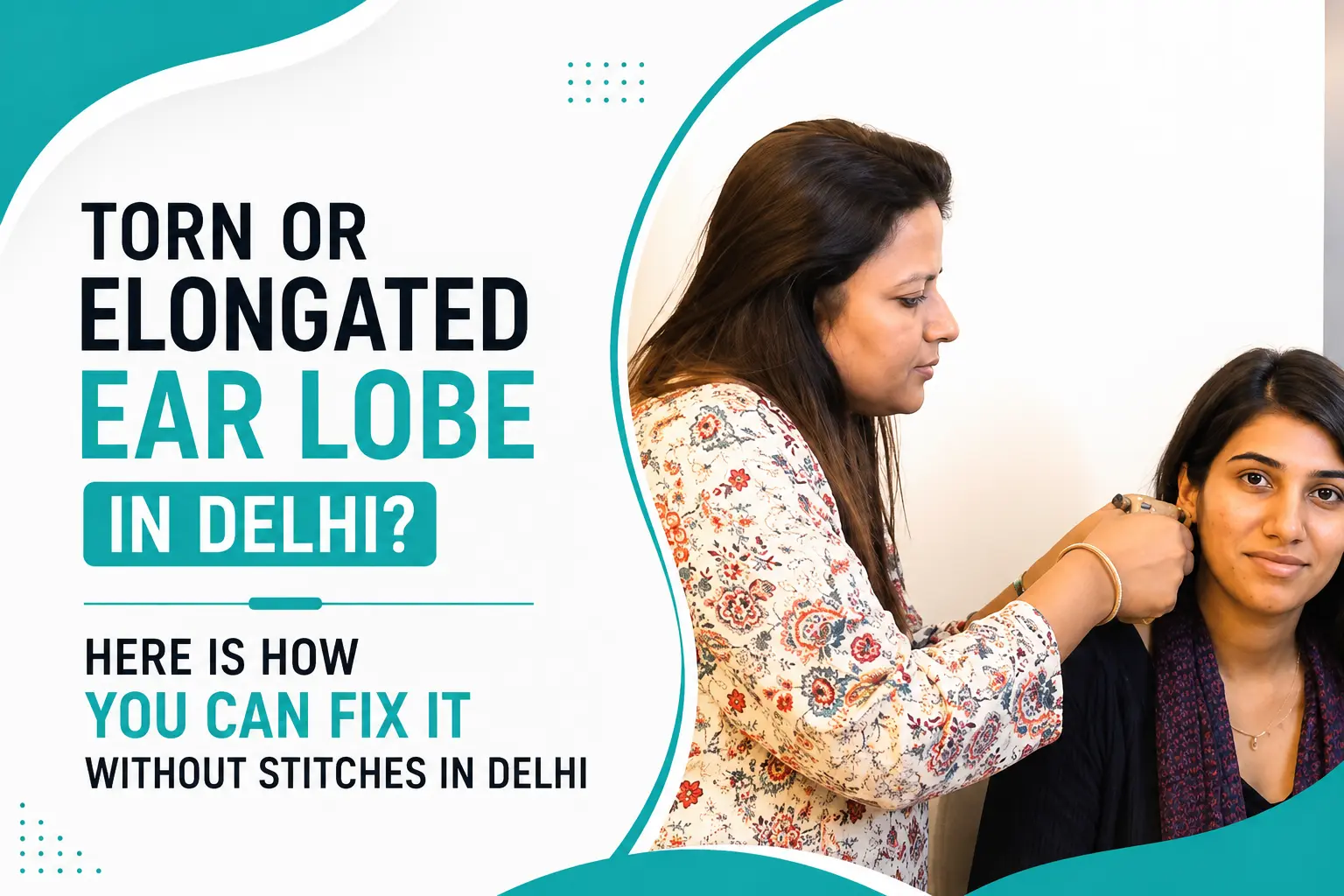
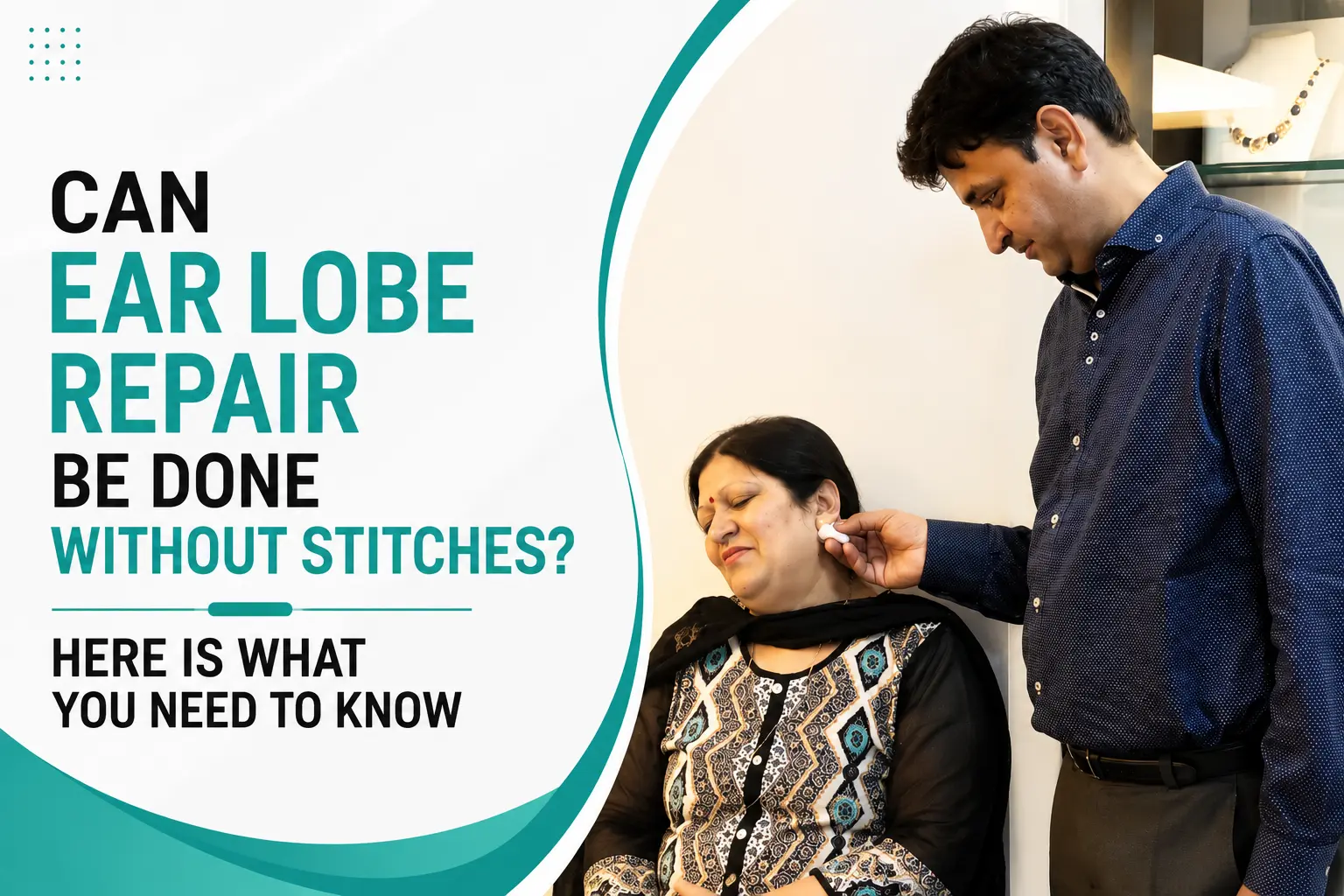
Many people delay treatment because they imagine a long or complicated process. In reality, stretched earlobe repair Mumbai clinics like Earhole offer a minimally invasive procedure with no stitches required.
Only the affected ear needs treatment. If one lobe has stretched and the other is healthy, you do not need to repair both.
We close the lobe and make a new piercing on the same day, so you don’t have to wait weeks before wearing jewellery again. The new hole is positioned carefully so that it matches the other ear for a balanced, natural look.
A surgical stud is fitted straight after the procedure. This stud is mandatory and plays an important role in helping the new piercing settle properly.
Aftercare for Stretched Ear Piercing Repair
Good aftercare protects your results. The surface can look settled within a couple of weeks, but the tissue underneath keeps rebuilding strength for longer.
- Keep the surgical stud in place for 6 to 8 weeks, and do not change it early
- Keep the area clean and dry, especially during the first two weeks
- Avoid sleeping on the treated ear for the first 2 to 3 days after the procedure
- Avoid pulling, tugging, or catching the stud on hair and clothing
- After 6 to 8 weeks, once the lobe has healed, switch to regular earrings gradually, starting with lightweight styles
This is especially important for anyone who has experienced uneven stretching before. Changing the stud too early or going back to heavy earrings too soon can put the same strain on the lobe again. This is where stretched ear piercing repair results can be affected most.
No routine follow-up visits are needed, but if you notice any discomfort, please contact the clinic.
Choosing a Safe Ear Piercing Clinic
Because the ear is a sensitive area, hygiene and experience matter. A safe ear piercing clinic will use sterile, single-use tools and clearly explain each step of the process before it begins.
When choosing a hygienic ear piercing India provider, look for these signs:
- Visible sterilisation practices for all equipment
- Hypoallergenic jewellery suitable for sensitive skin
- Clear, written aftercare instructions
- An experienced specialist who answers questions openly
- A calm, unhurried consultation before any procedure
If you are searching for an ear piercing specialist Mumbai offers, take time to ask about hygiene, jewellery materials, and aftercare. A good clinic will welcome these questions.
Frequently Asked Questions
1. Is it normal for one earlobe to be bigger or lower than the other?
Yes. Most people have slight natural differences between their ears, and habits such as sleeping on one side or wearing heavier earrings on one ear can make the difference more noticeable. If one hole looks clearly stretched or your earring keeps slipping, a specialist can check it.
2. Can a stretched earlobe go back to normal on its own?
Usually not. Taking earrings out can stop further stretching, but the hole rarely shrinks back to its original size without help. A professional stretched ear hole fix is the most reliable way to restore the lobe’s shape.
3. Do I need to repair both ears if only one is stretched?
No. Only the stretched ear needs treatment. During the procedure, the new piercing is placed to match your other ear so both sides look balanced.
Final Thoughts and Next Steps
So, does one ear lobe stretch faster than the other? It often does, and it is usually caused by everyday habits rather than anything you did wrong. Catching the signs early, such as a wider hole, a loose earring, or a thinning lobe, makes treatment simpler and recovery smoother.
If one of your ears is showing signs of stretching, do not wait for it to get worse. Book a consultation with Earhole Repair today for a safe, hygienic, minimally invasive repair with no stitches required, a same-day new piercing, and clear aftercare guidance from start to finish. Get your earlobes back to looking natural and balanced.