

Festive season is the time for jhumkas, chandbalis, and statement studs. But heavy Diwali earrings can strain your earlobes more than most people realise, especially when worn for long hours over several days. The short answer: limit wear time, choose lighter styles, and act early if you notice stretching or a small tear. This guide explains how the strain happens, the warning signs, and how a minimally invasive repair can fix the damage.
How Heavy Diwali Earrings Can Strain Your Ear Lobes
Your earlobe is soft tissue with no bone or firm cartilage to support it. When you wear a heavy earring, the whole weight hangs from one small piercing hole. That steady downward pull slowly thins and stretches the tissue.
Festive wear makes this worse. People often wear their heaviest pieces for 10 to 14 hours at a time, across many days of pujas, parties, and family visits. Even a lobe that copes well with daily studs can struggle under that load.
The damage is usually gradual. A hole that was round and small can turn oval and wide, and a lobe that looked firm can start to feel thin.
Why Festive Jewellery Puts Extra Pressure on the Lobe
Not all traditional earrings are equal. Several features of festive jewellery increase the strain.
- Weight. Large gold, kundan, and oxidised pieces can be surprisingly heavy.
- Length. Long drops swing and pull downward with every movement.
- Size. Wide designs catch on hair, dupattas, sarees, and scarves.
- Hard-to-balance shapes. Top-heavy designs tilt the post and drag on one edge of the hole.
- Long wear time. Hours of constant weight give the tissue no time to rest.
Early Signs Your Earlobes Are Under Strain
Catching the problem early makes treatment simpler. Check for these signs after festive wear.
- A piercing hole that looks wider, longer, or more oval than before
- An earring that hangs lower or tilts to one side
- A lobe that feels thin, soft, or stretched near the hole
- Redness, soreness, or tenderness after you remove your earrings
- A small notch or slit at the bottom of the hole
- Earrings that keep slipping out or need extra backs to stay on
A Quick Weight Guide for Festive Earrings
There is no single safe weight for everyone. Lobe thickness, age, and skin quality all matter. Use this table as a simple guide, and treat it as general advice rather than a rule.
| Earring Type | Strain Level | Safer Wearing Habit |
| Light studs | Low | Suitable for most of the day |
| Small hoops or drops | Low to moderate | Fine for several hours |
| Medium jhumkas | Moderate | Limit to a few hours and take breaks |
| Large chandbalis | High | Wear briefly, for photos or key moments |
| Heavy ear cuffs or full sets | High | Keep to short periods only |
What to Do to Protect Your Lobes This Festive Season
You do not have to give up your favourite pieces. A few simple habits make a big difference.
- Rotate your earrings. Swap heavy pairs for light ones during the day.
- Save heavy pieces for key moments. Wear them for the puja, the family photo, or the main event, then change.
- Take regular breaks. Remove earrings for a few minutes every few hours.
- Check the backs. Make sure they are secure but not pressing hard on the lobe.
- Support the weight. Some people use lobe-support pads or lighter alternatives for very heavy designs.
- Remove earrings at night. Sleeping in earrings adds pressure and can irritate the area.
- Be careful with clothing and hair. Tie hair back and take care when pulling tops or sarees over your head.
What If Your Lobe Is Already Stretched or Torn?
Sometimes the damage has already happened. A stretched hole will not usually return to its original size on its own, and a small tear can grow with one more tug.
A specialist can check your lobe and confirm the best plan. Here is how the common types are described:
- Stretched earlobe is for holes that have widened gradually from heavy earrings but have not fully split.
- Split earlobe is for lobes where the earring has pulled through, leaving a clean opening.
- Torn earlobe repair is for larger, rougher, or older tears that may need a little extra care as they heal.
Minimum Invasive Ear Lobe Repair: What to Expect
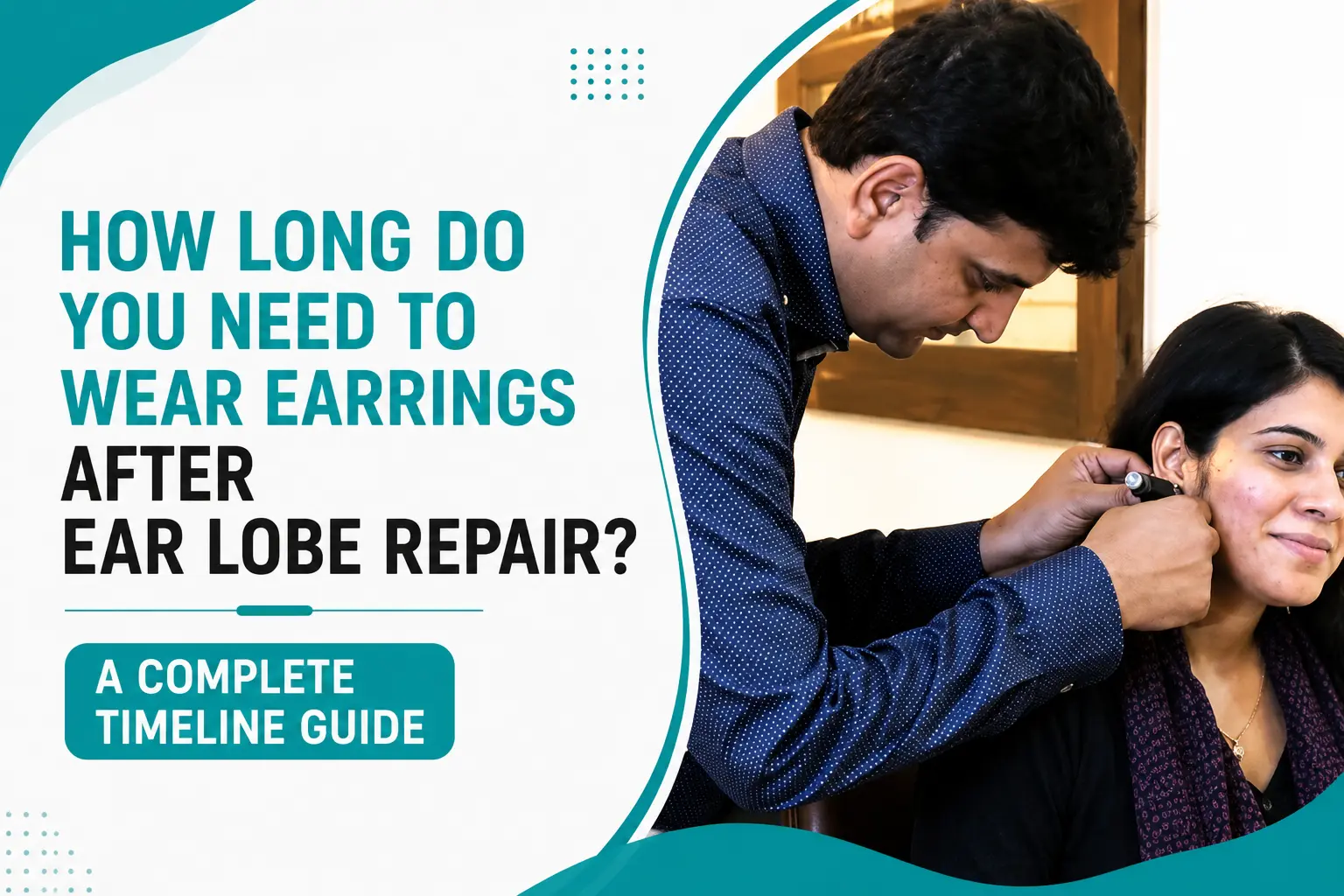
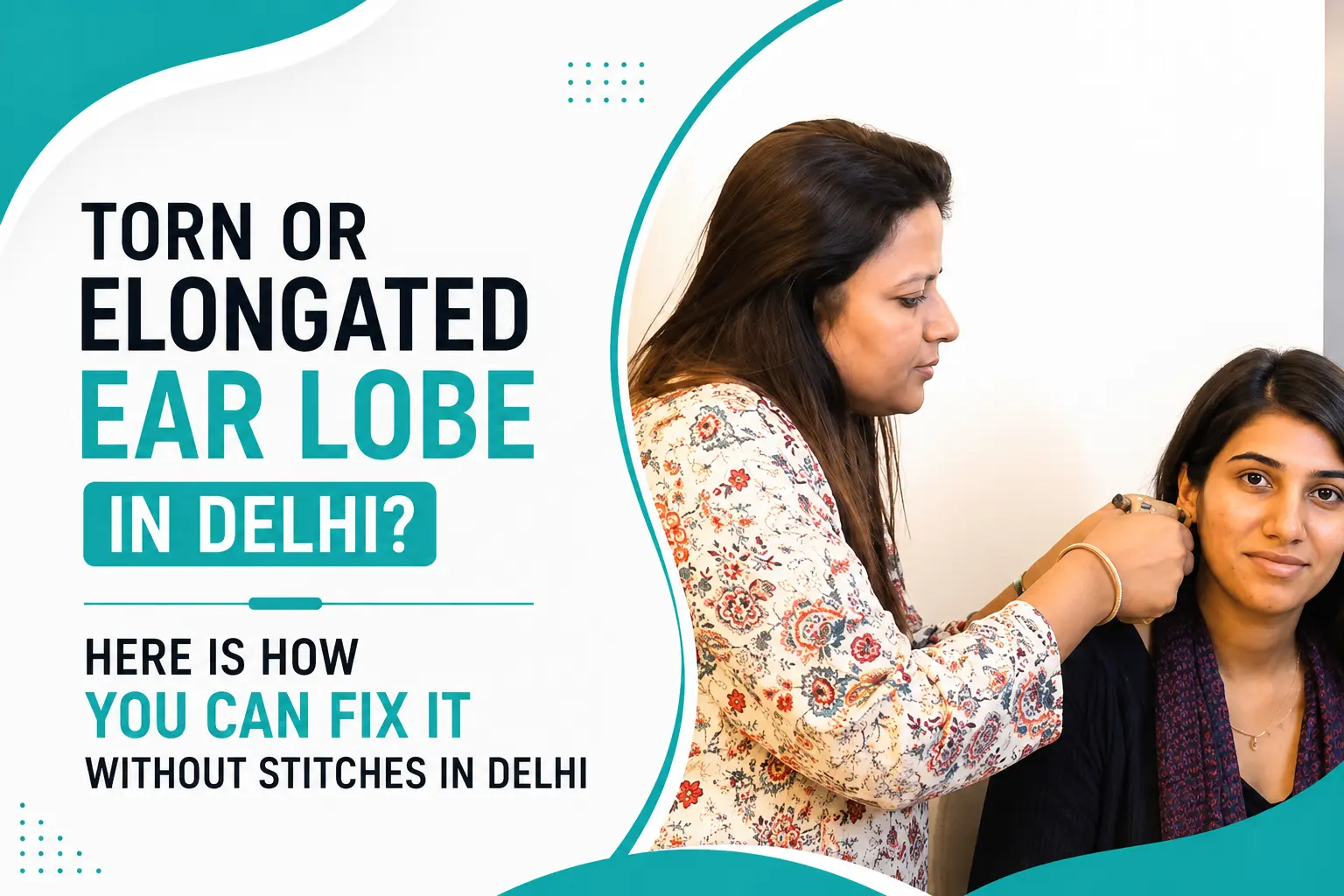
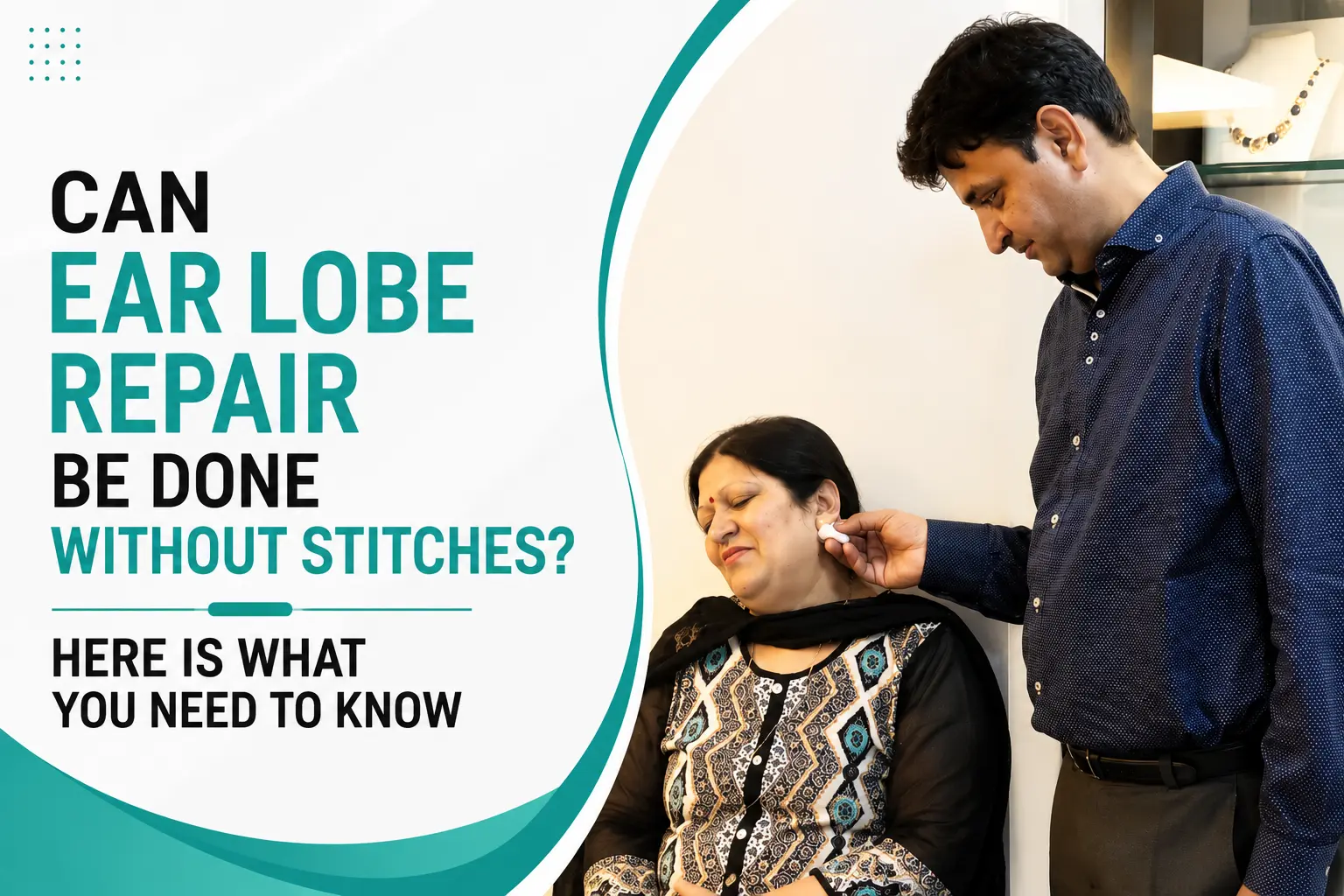
Many people put off repair because they imagine a complicated process. A minimum invasive ear lobe repair is much simpler. It is a minimally invasive procedure, and no stitches are required.
Here is how the visit works:
- The specialist checks your lobe and confirms that repair is suitable
- The damaged lobe is closed carefully to restore its natural shape
- We close the lobe and make a new piercing on the same day
- A surgical stud is fitted straight after the procedure
- You receive clear aftercare instructions to follow at home
Aftercare: Protecting Your Results
The surface of the lobe can look settled within one to two weeks, but the deeper tissue keeps rebuilding for 6 to 8 weeks. Good aftercare protects your result.
- Keep the surgical stud in for 6 to 8 weeks, and do not change it early
- Keep the area clean and dry, especially in the first two weeks
- Avoid sleeping on the treated ear for the first 2 to 3 days
- Avoid pulling hair, scarves, or masks across the lobe
- After 6 to 8 weeks, once the lobe has healed, switch to regular earrings gradually
When you return to regular jewellery, start with lightweight styles and build up slowly. Going straight back to your heaviest pair can put the same strain on the lobe again.
Planning Repair Around the Festive and Wedding Season
If you want to wear your own earrings at a future event, timing matters. The surgical stud must stay in for 6 to 8 weeks before you can switch to regular earrings.
So if you are planning ahead for the next festival or wedding season, book at least 8 weeks before the date. If your event is sooner, repair is still possible, and you can plan your outfit and hairstyle around the stud.
Planning early also gives your lobe time to heal fully before you reach for your heaviest pieces again.
Choosing a Safe Clinic for Ear Hole Repair Mumbai
Because the ear is a sensitive area, the clinic you choose matters. For ear hole repair Mumbai services, look for:
- Sterile, single-use tools and visible cleaning practices
- Hypoallergenic jewellery suitable for sensitive skin
- A calm, unhurried consultation
- Written aftercare instructions
- A specialist who answers questions openly
Frequently Asked Questions
1. Can heavy earrings damage your earlobes permanently?
Yes, they can. Wearing heavy earrings for long periods can stretch the piercing hole and thin the lobe, and the hole rarely returns to its original size on its own. A specialist can restore the lobe’s shape with a repair.
2. How long can I safely wear heavy earrings?
There is no single rule, but shorter is better. Many people do well wearing heavy pieces for a few hours and then switching to lighter ones. If your lobe feels sore, thin, or stretched, take the earrings off and rest your ears.
3. How do I fix a stretched earlobe after the festive season?
A minimally invasive repair can fix it, and no stitches are required. We close the lobe and make a new piercing on the same day, with a surgical stud fitted straight after. The stud stays in for 6 to 8 weeks, and after that you can switch to regular earrings gradually.
Final Thoughts and Next Steps
Heavy Diwali earrings can strain your ear lobes, but the damage is easy to prevent and easy to fix. Rotate your jewellery, take breaks, and pay attention to early signs such as a wider hole or a thin lobe.
If your ears are already showing signs of strain, do not wait for a small problem to become a bigger one. Book a consultation with Earhole Repair today for a safe, hygienic, minimally invasive repair with no stitches required, a same-day new piercing, and clear aftercare guidance from start to finish.